
About EKBN
Advancing the Field of Knowledge Brokering

We believe the future of education depends on the people who create possibilities, foster collaboration, and move evidence into action.
The Education Knowledge Broker Network (EKBN) is a professional learning community for people in diverse educational sectors such as schools, nonprofits, research institutions, and policy organizations. What brings them together is a shared commitment to using knowledge in ways that support learning, equity, and real-world change.
EKBN is contributing to the growth of the field by offering programs, professional development, and peer learning to advance effective knowledge brokering in education.
Whether you’re deeply engaged in this work or just beginning to see yourself in it, EKBN is here to support your growth, learning, and leadership.
This is a community where your experience is recognized, your skills are supported, and your voice contributes to something bigger.
Who We Are
EKBN is a growing professional learning space where collaboration isn’t just encouraged—it’s expected. We connect people across roles and disciplines so knowledge can be shaped, shared, and applied in ways that truly serve learners.
We are advancing the field of knowledge brokering by:
Supporting professionals who make evidence usable.
Equipping our members with tools, resources, and peer learning opportunities.
Elevating the role of knowledge brokers so their impact is visible, valued, and sustained.

Knowledge Brokers Make a Difference
Education is a dynamic, complex system.
No single role, organization, or perspective can meet its challenges alone. When knowledge is exchanged across boundaries, better decisions are made, outcomes are more equitable, and every learner benefits.
Whether you’ve been shaping evidence use for years or are just beginning to discover this work, EKBN is here to recognize your expertise, strengthen your skills, and connect you with others doing the same.
Together, we’re building the field of knowledge brokering—and shaping the future of education.
The Values That Guide Us:
Our North Star
At EKBN, our work is grounded in the belief that equity and evidence must move together and real progress requires collaboration, context, and community. We believe knowledge is most powerful when it is co-created, responsibly used, and broadly shared.
We envision an equity-centered education system that actively supports and facilitates the production, mobilization, and use of evidence in shaping policy and practice. Such a system is guided by the principles of democratizing evidence:
Inclusive Engagement
An inclusive and diverse group of stakeholders—students, educators, researchers, families, communities, and people who hold differing identities and statuses — participate as informed voices in shaping the production and use of evidence. The authentic engagement of those most adversely affected by education inequality is a high priority.
Full Participation
Stakeholder participation spans the entire spectrum of evidence production and use including identifying problems to study, developing research agendas, conducting research, interpreting findings, and using evidence to design and implement policy and practice.
Responsive Agendas
Research addresses high priority problems of practice and policy with a special focus on access to high quality curriculum and instruction. In this way, all students stand to benefit and succeed, with high priority attention given to equity issues relating to historically disenfranchised students and communities.
Responsible Production & Use
Toward a more evidence-informed education system, stakeholders respect scientific inquiry and reporting while integrating lived experience, practice-based evidence, indigenous knowledge, and community values in education decision-making.
Our Mission
The mission of the Education Knowledge Broker Network is to cultivate an inclusive professional community of knowledge brokers in education committed to democratizing the production and use of evidence in service of an education system that is just and equitable, with particular attention to learners and communities who have been historically and systematically disenfranchised.
The Network provides space and learning opportunities for brokers to:
- authentically engage content and context experts,
- elevate the voice of practitioners and educators and other key stakeholders,
- facilitate the ethical and collaborative production of evidence and exchange of knowledge,
- curate promising educational practices and high quality curriculum,
- promote the use of evidence for educational decision making at the local, state, federal, and tribal levels.
Guiding the Network
The Education Knowledge Broker Network is led by a team of practitioners, researchers, and policy leaders who share a vision for making education more collaborative, evidence-informed, and equitable. Together, they guide the direction of EKBN and support the growth of a strong professional community.

Katherine “Katie” Philp, EdD
Director
Katherine Philp brings diverse, cross-sector experience in education, public health, and nonprofit leadership. Her scholarly work focuses on afterschool programs and community-based learning, with a particular interest in participatory research and bridging theory and practice. For over a decade, Katherine has supported community-based organizations in Orlando, FL—securing millions in funding for local youth initiatives and advising grassroots coalitions dedicated to positive youth and family development.
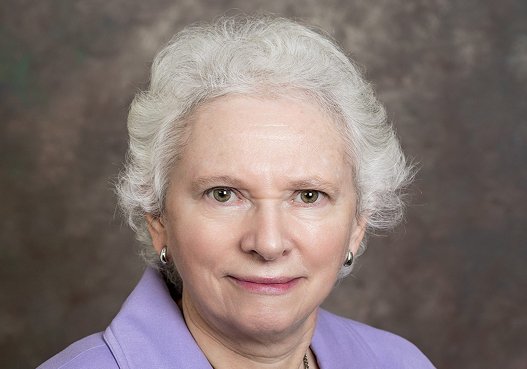
Deborah Amsden Micklos, MS
Program Coordinator
Debbie manages projects at the Center for Research Use in Education (CRUE), supporting the Education Knowledge Broker Network and other initiatives. With more than 20 years of experience in education research and a decade in research translation, she focuses on connecting evidence to practice to improve quality of life for families and communities. Previously, she led early childhood initiatives at UD’s Center for Disabilities Studies, consulted with the Delaware Department of Education, and taught family and consumer sciences at the middle and high school levels.

E. Carly Hill
Communications Manager
Carly leads the Center’s online presence and knowledge dissemination strategies, combining communication, research, and innovation to advance education. She is also a Research Associate II with CRESP and HDFS, bringing six years of experience evaluating programs such as LEND and SEAL. Carly holds a B.S. in Health Science from the University of Delaware and is pursuing her M.S.W. there.

Liz Farley-Ripple, PhD
Liz Farley-Ripple co-directs the Center for Research Use in Education (CRUE) and serves as Professor of Education and senior associate director at the University of Delaware’s School of Education. With more than 20 years of experience, her work bridges research, policy, and practice to strengthen educational systems and advance equity. Her scholarship spans research use, administrator mobility, teacher quality, and schools’ use of data—always with a focus on building capacity for improvement across the system.
Board of Directors

Jessica Jackson, MEd
Chair
Jessica is the Senior Lead, Professional Learning at aiEDU, where she leads the vision, design, and delivery of AI Readiness professional learning for educators, school leaders, and education systems nationwide. Her work focuses on building research-informed, practice-based learning experiences that support thoughtful AI readiness, skill building, and classroom application while advancing equity, learner variability, and instructional quality. Jessica began her career as a classroom teacher and later became a school leader. She has spent more than two decades working across schools, districts, nonprofits, and education technology organizations in roles focused on professional learning, instructional design, and systems-level improvement.

Matthew B. Courtney, EdD
Chair Emeritus
A passionate advocate for education, Matthew specializes in evidence-informed school improvement. He began as a music educator before moving into leadership across nonprofit, higher education, and state government sectors. As founder of Courtney Consulting LLC, he advises schools on leveraging evidence-based decision-making to accelerate achievement. His published research and consulting work have shaped both local practice and statewide policy.

Max Altman, PhD
Max Altman is the Director of Research and Policy at the Southern Education Foundation, where he oversees SEF’s research agenda, authors many of its reports, and manages a number of its justice-focused partnerships and networks. He previously served as the technical assistance lead for the Pacific Regional Educational Laboratory at McREL International in Honolulu. A former high school math teacher, Max also served as a professional developer, curriculum writer, and instructor in teacher education and mathematics at the University of Michigan.

Beth Brice, MEd
Beth is the Manager of Instructional Advocacy and Communications at the Tennessee Education Association, where she leads strategy and storytelling that elevate educator voice and strengthen public education across the state. Her work centers on instructional policy, educator engagement, and translating complex education issues into clear, compelling messages. Beth also worked as a high school English teacher in rural Tennessee and served two terms as President of the Tennessee Education Association.
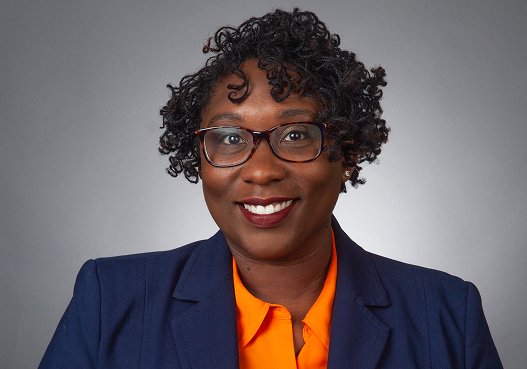
DeShawn Chapman, EdD
DeShawn is a community engagement and educational strategist at the University of Central Florida. She partners with leaders across sectors to build initiatives that enrich learning and promote equitable outcomes for historically disenfranchised learners. She also runs Equity Learning Bridge, LLC, where she continues her commitment to equity-driven collaboration.
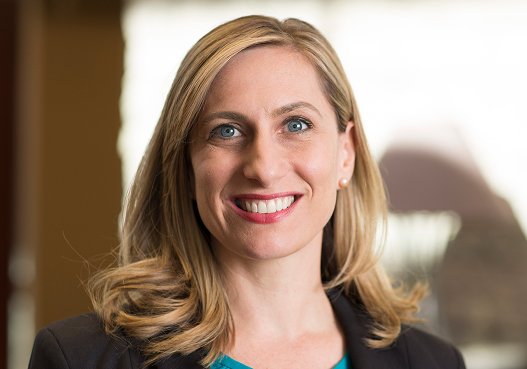
Lenay Dunn, PhD
Lenay is a Research Director at WestEd and serves as Deputy Director of the Regional Educational Laboratory West. She leads work that bridges research and practice and helps partners use evidence to ensure equitable access and outcomes. Dunn has over 25 years of experience in education as a teacher, leader, and researcher. She earned her MA in education from Stanford University and her PhD in education policy from Arizona State University.
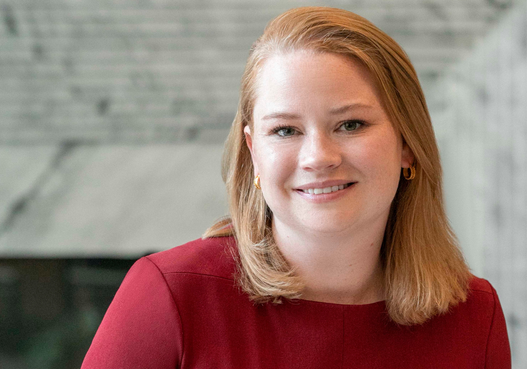
Abigail Gifford, JD, MPA
Abigail is Senior Legal Counsel at Rocketship Public Schools, a national network of charter elementary schools. She has more than a decade of experience in K–12 public schools across both traditional and charter sectors. She brings extensive expertise in education law, policy, and nonprofit governance, with a strong focus on supporting schools and networks to operate effectively and equitably. Abigail is passionate about advancing equity in education and supporting students’ access to high-quality learning opportunities.

Joel Gomez, EdD
Joel is a passionate advocate for multilingual education and has served as president of the National Association for Bilingual Education, receiving their lifetime achievement award. He began as an elementary school teacher, before taking on leadership and professional development roles. He’s professor emeritus at George Washington University, where he served as associate dean of research, and chair of educational leadership. Recently, Joel was president of the Center for Applied Linguistics and now leads Dialogics, Inc.

Adam Hicks, EdD
Adam is Assistant Superintendent of Curriculum, Instruction, and Assessment at Shelby County Public Schools in Kentucky, where he leads district-wide initiatives in innovative assessment practices and local accountability systems, focusing on moving beyond traditional standardized testing to create authentic, community-driven measures of student success. His accomplishments include recognition as the WHAS ExCel Teacher of the Year (2015) and as AdvanceKentucky’s Outstanding Administrator (2024).

Jim Kohlmoos
Jim Kohlmoos is Principal of EDGE Consulting LLC, working with network collaboratives involved in the production and use of evidence in education and associated sectors. He has served in a range of executive leadership positions in the Washington DC area over the past 50 years including National Association of State Boards of Education, Knowledge Alliance, US Department of Education, and Close Up Foundation. A graduate of Stanford University, Jim began his career in education with the US Teacher Corps in Salinas CA and with the Peace Corps in Malaysia.

Babe Liberman, EdM
Babe is a Project Director on the Powerful Learning team at Digital Promise, a national nonprofit advancing education innovation. In this role she synthesizes research and practice insights on topics like AI literacy, digital well-being, and participatory design, into strategic communications for educators and policymakers. Babe previously served on the leadership team at a public charter school network, supported education organizations on applying learning sciences research in practice, worked as a museum educator, and built collaborative partnerships across academia, K-12 education, and nonprofits.

Rameez Mahmood, MSW, MBA (Cand.)
Rameez is a co-founder at Edvisor.ai, an edtech company replacing textbooks with AI-native alternatives that increase accessibility and affordability. He leads Growth and Operations. Previously, Rameez worked in front-line social work, supporting vulnerable populations in various capacities before pivoting into tech to expand his impact. He went on to lead Growth at YC-backed companies and was a key player in Doordash’s meteoric rise in the United States. He and his spouse are passionate home educators with two daughters.

Jasmin McKenzie
Jasmin is an Academic Designer at McGraw-Hill, where she designs standards-aligned, research-informed instructional materials that support teachers and deepen student engagement. Her work centers on literacy, pedagogy, and curriculum design that honors both rigor and humanity. Jasmin worked as a secondary classroom educator, mentor teacher, and curriculum designer, and has served as an AP Reader for the College Board and as a Vocal Justice Teacher Fellow, bringing experience across K–12 instruction, assessment evaluation, and teacher support.
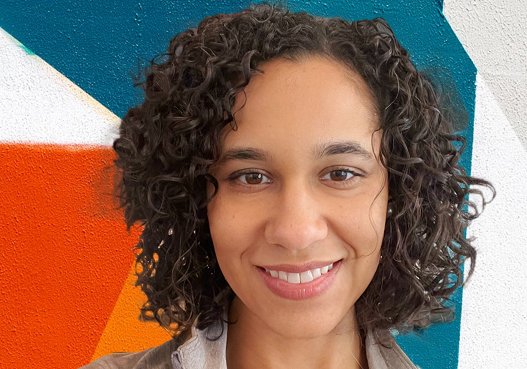
Alicia Okpareke, PhD
Alicia is an education researcher with more than 10 years of experience supporting SEAs, districts, schools and community organizations with technical assistance and research studies. Her areas of expertise include teacher workforce issues, literacy, and special education. A former teacher and data coordinator in Chicago Public Schools, Alicia holds a PhD in Special education from the University of Illinois at Chicago. Alicia served as the inaugural chair of EKBN’s Board of Directors.
Kathyanne Sheffield, EdD
Kathyanne Sheffield is Director of Career and Technical Education at Aldine ISD, where she leads efforts to maximize student awareness, skill development, and access to high-wage, high-demand career pathways. Her work centers on equity-driven workforce preparation and systems-level improvement. Previously, she served as an assistant principal, ESL and French teacher, curriculum writer, and district leader across Texas, bringing 18 years of K–12 experience. She has led social-emotional learning and transition initiatives and presented nationally on equity and inclusive, whole-child educational practices.

Philip Vahey, PhD
Phil is the founder of Applied Learning Insights, where he applies learning science and participatory design principles in partnership with a range of organizations to foster the creation of innovative EdTech that addresses key challenges in education. Previously he served as the Director of Applied Learning Sciences for Houghton Mifflin Harcourt (HMH), where he led the application of learning science to large-scale product development. Prior to HMH, he was the Director of Strategic Research and Innovation at SRI Education, overseeing design-based research projects funded by the NSF, the DOE, and various philanthropic foundations.